The Notting Hill Carnival, and One of London's Longest-Loved Residential Areas
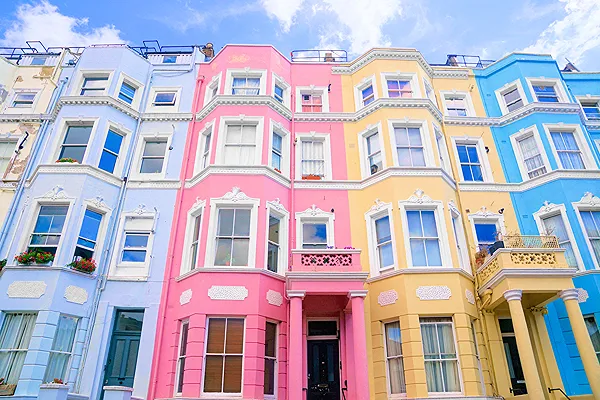
London's summer reaches its high point in late August with the Notting Hill Carnival. This year, 2026, the Carnival runs from Saturday 29 to Monday 31 August (the August Bank Holiday weekend), marking its landmark 60th anniversary. Europe's largest street festival, it draws more than two million visitors every year.
The Carnival takes place in Notting Hill, an area of west London within the Royal Borough of Kensington and Chelsea that has long been one of the capital's most sought-after residential neighbourhoods, quite apart from its association with the Carnival. In this newsletter, we look at the Carnival's origins alongside what makes Notting Hill such an enduringly popular place to live, the latest rental market data, and a few points worth knowing if you're considering a move to the area.
The History of the Carnival
The roots of the Notting Hill Carnival trace back to the Notting Hill race riots of 1958. The following year, activist Claudia Jones organised a “Caribbean Carnival” as an act of community solidarity, and by 1966 this had grown into the street carnival recognisable today. Six decades on, it remains a celebration of Caribbean culture and history in London.
Over Carnival weekend, Saturday hosts the Panorama steel band competition, Sunday is Children's Day, and Monday brings the main parade — three days during which the streets fill with music and colour.
A Long-Loved Residential Area, and Its Housing Styles
Notting Hill took its present shape in the 19th century. Once open farmland on the edge of London, the area was developed by the Ladbroke family, with architect Thomas Allason among those responsible for its rows of white stucco-fronted terraces. Much of the housing dates from the Georgian and Victorian periods, and many streets are arranged around private communal garden squares.
The area is equally well known for its pastel-painted façades — though this wasn't always the case. The bright colours date only from the mid-20th century, when artists and other creative residents who moved into the area began painting their houses in the individual colours now considered part of Notting Hill's character.
The two housing types found throughout the area are the terraced house and the mews house. Rows of 19th-century stucco terraces, typically arranged over three or four storeys, line many of Notting Hill's streets, while mews houses — originally built as stables and coach houses, with staff accommodation above — sit tucked along cobbled lanes just off the main roads, giving parts of the area their distinctive, more intimate character.
Much of this period housing stock sits within conservation areas, which brings its own set of practical considerations for owners. White stucco façades in particular need repainting every few years to stay in good condition, and any external changes typically require planning consent given the conservation status. For landlords letting property in the area, factoring this maintenance cycle into the annual budget — and using a managing agent familiar with local conservation rules — helps keep these period homes both compliant and well presented for tenants.
The Current Rental Market
According to Dataloft Rental Market Analytics by PriceHubble (published January 2026, covering the preceding 12 months), the average rent achieved for homes let in Notting Hill was £2,586 per month, up 3% on the previous 12-month period.
Flats accounted for 92.4% of lettings, at an average rent of £2,507 per month. Houses — chiefly terraced houses and mews houses — made up a smaller share of the market (around 8% combined) but achieved noticeably higher rents, averaging £3,700–£3,800 per month, roughly 1.5 times the average for flats. This reflects both the larger size of these properties and the relative scarcity of period houses in the area.
Kens Estate publishes regular monthly updates on the UK property market. If you are interested in UK property investment or would like to keep up with the latest market trends, please bookmark our UK Property Market Updates page.
Looking for a Property in the Area
Notting Hill's long development history means much of the area falls within conservation areas, so new-build properties come to market far less often than in many other parts of London. Most of what's available is period stock — terraced houses, or flats converted from larger Victorian and Edwardian houses.
Carnival weekend itself brings road closures and large crowds each August, which is worth factoring in if you're weighing up the area. That said, many buyers and tenants are drawn to Notting Hill precisely for its atmosphere and architecture.
When comparing properties, it's worth looking beyond the area alone — the age and condition of the building, and the practicalities of your daily commute, matter just as much. Kens Estate is happy to advise on the specifics of any area you're considering, so please get in touch.